

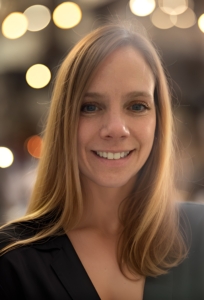
Dr. Lisa D’Alessandro
Introduction
Dr. Lisa D’Alessandro is a pediatric cardiologist at Trillium Health Partners in Mississauga, where she has practiced for the past six years. Dr. D’Alessandro balances a busy clinical practice with teaching responsibilities, advocacy work, and a commitment to improving pediatric cardiology resources in community hospital settings. For her many accomplishments, she was nominated for the Pediatrician of the Season award by her colleague, Dr. Alexandra Kilian.
The Journey to Pediatric Cardiology
Dr. McConnery: Tell us a little bit about yourself and what brought you to where you are today.
Dr. D’Alessandro: I went to medical school in London at Western, and then I went to the Children’s Hospital of Philadelphia to do my cardiology fellowship. I came back and did a cardiovascular genetics subspecialty fellowship at SickKids, and then I went to work in Houston for five years before coming to Credit Valley.
Dr. McConnery: That’s quite a journey. What made you decide to come back to Ontario and transition to general pediatric cardiology?
Dr. D’Alessandro: For family reasons, mainly. My husband was here and we had two kids and we wanted to live in the same place. I also really missed the Canadian healthcare system being in the US. The interesting thing about my career path is that I started out doing pediatrics and really loving cardiology, but then in doing cardiovascular genetics, it was almost like becoming more generalized again. When you’re dealing with genetics of congenital heart disease, you’re seeing a lot of patients being evaluated for syndromic heart disease—multisystem involvement, dysmorphology, a lot of genetics background, aortopathy work. So I became a generalist again in care of children who had heart disease.
Dr. McConnery: It sounds like you went through the funnel and then fell through the hole at the bottom and started spreading back out again.
Dr. D’Alessandro: (laughs) Kind of came full circle. But it was good because I had such good training in pediatrics—I did four years of general pediatrics—and I was so well equipped when I went into my fellowship. It’s nice to get some of that knowledge back again. It’s useful for patients because even when they come to their cardiology visit, we spend lots of time talking about feeding and breastfeeding, and every second patient has a rash, so it’s helpful to have the broader knowledge base.
A Week in the Life
Dr. McConnery: Can you tell me about what your day-to-day looks like now?
Dr. D’Alessandro: I’m a jack-of-all-trades when it comes to cardiology now. On Mondays I’ve made that my sedation and echo day. I work in cardiopulmonary and do sedated echoes, then do exercise stress tests while I’m there in the lab. I read my studies for the week, read ECGs, talk with the sonographers, and sometimes do a clinic in the afternoon or go see consults.
Tuesdays and Thursdays are usually full clinic days with outpatient visits, and if there are consults or echoes that need to be done or other inpatient things, I do that. I also read all cardiac diagnostic testing for Oakville outside of Credit Valley.
Dr. McConnery: How do you manage having three pediatric cardiologists but all part-time? Do you have a formal call schedule?
Dr. D’Alessandro: We can’t really fill a call roster, so we don’t have a formal call schedule. We just try to be available when we can. Sometimes we get a call after hours about a patient, or we’ll stay late if somebody needs a consult or something has to get done. Because I’m right there in clinic, it means I can be hands-on with the sonographers. We have a very good working relationship. If they’re scanning something and they’re not sure what they’re looking at, or they’re worried that something has changed significantly, they can call me and I’ll come over and take images. If they order an echo in the NICU and the sonographer starts the scan and it’s something unexpected or serious, they call me and I can be there in five minutes.
Teaching and Academic Contributions
Dr. McConnery: Do you do anything in terms of teaching or administrative work?
Dr. D’Alessandro: I have an academic appointment with McMaster, and I have residents in my clinic—mostly family medicine residents and then a few pediatric residents. I do teaching sessions; I did a physical exam skills teaching session this year. I also teach for SickKids cardiology fellows at their academic half day, mostly around cardiovascular genetics. I still teach the cardiovascular genetics course that we created when I was at Texas Children’s. Even though I’ve been gone for longer than I was there, I come back every year to do that course.
I also do the American Board of Pediatrics prep for cardiology exams. I’ve been doing those lectures for almost 10 years now.
Managing Urgent Cases
Dr. McConnery: Your nominator mentioned you’re very responsive to urgent assessments. How do you manage getting pulled in all these different directions during a busy day?
Dr. D’Alessandro: Fellowship training was great for that—being on call and just more work than you can possibly handle all happening at once, and it’s all acute. I’ve had lots of practice prioritizing. I’ve had occasions where there’s a new baby born, they’re cyanotic, it’s complex congenital heart disease, and I just need to be at the bedside. In those situations that just becomes a priority. If that means clinic has to get interrupted, we give the patients the option if they want to wait or be rescheduled.
We try to take the best care possible of the patient who’s in front of you. At any given moment you’ve got shifting priorities, but when you’re with a patient, it’s giving them your full attention for the time that you’re with them—really having the bandwidth to think through their complex needs in that moment. My experience has been that patients are very understanding. I think they understand that if it was their child who needed acute cardiac care, that’s what they would want to happen as well.
Partnering with Tertiary Care
Dr. McConnery: How does your connection to SickKids work, especially for cases that need tertiary care?
Dr. D’Alessandro: Because cardiac surgery is centralized to SickKids in Ontario, all the other centers have to manage surgical patients leading up to the point they need surgery, and then they get them back afterwards. That’s how we function at Credit Valley as well. I follow my patients until they need surgery, and then I present them to the group at surgical conference. In that way, I’ve come to know most of the cardiologists and surgeons at SickKids.
When we call them and say we have a new truncus arteriosus and give them the oxygen saturation and what we’re doing to manage them, they know we’ve got the right diagnosis, we’ve done the echo, we know how to manage the patient. It just streamlines everything in terms of getting patients transferred.
Dr. McConnery: Do you have any advice for how pediatricians can work more effectively with tertiary care in a collaborative way?
Dr. D’Alessandro: I think there are two things that I’ve found most helpful. One is making direct connections with people—knowing who your go-to people are. I have a couple of colleagues I know very well at SickKids that I have a partnership with, and I can call them on their cell phone and say, “This is what’s going on, can you help me streamline this situation?” It works both ways because the same people call me and say they’ve been following a patient who lives out in the West End and would prefer to follow closer to home.
We have a shared care model for some complicated patients. For example, I followed one patient with isolated premature ventricular contractions, but the amount got to be over 40%, which was very high. I had a partnership with a specific EP physician at SickKids, and we just alternated visits—she was seen by me every six months and by him every six months, alternating. That way we both knew that if things were deteriorating, we already had an established pathway.
All of our surgical patients have their community cardiologist and their SickKids cardiologist. Once they go to get surgery at SickKids, they’re assigned a cardiologist there, and that’s your liaison person.
Advocacy for Pediatric Resources
Dr. McConnery: Dr. Killian talked about how you’ve really advocated for more echocardiography supports. Can you walk us through your approach to advocacy?
Dr. D’Alessandro: It has been a huge challenge, probably one of the biggest challenges I’ve faced being in the community. Because we are hospital-based, we rely on hospital resources to get imaging for our patients. All of our cardiac diagnostics go through adult cardiac diagnostics, and we’ve been essentially given a set number of tests per week. Anything over and above that requires a phone call or some maneuvering.
Over the last seven years, I’ve spent a lot of time thinking about this problem and looking at all the different possible routes to make it better. I’ve tried a multi-pronged approach—working with adult cardiology and our cardiac diagnostics group, working with our sonographers, working with pediatrics. There’s been this consensus that we would like to move our cardiac diagnostics under pediatrics, but it may or may not be feasible because it requires infrastructure, hiring your own techs, having machines.
The other thing that’s come to light is that there are real disparities in our healthcare system when it comes to pediatric patients. If you look at OHIP billing codes, there is one code for echo. Whether that’s an adult study or a full congenital study on a newborn baby, you’re paid the same. The tech fee is the same and the professional fee is the same. But when you do the pediatric study, it takes twice as much tech time, twice as long to read. The amount of work is so much more. Per time it’s under-remunerated, and that trickles down to not being given enough spots for pediatric patients because the hospital is remunerated less for every pediatric study they do.
Dr. McConnery: So what have you done to address that?
Dr. D’Alessandro: I’ve tried lobbying to have a new billing code created, and in that process we were hoping to link it with having pediatric echo accredited. Pediatric echos are currently not accredited, but it is coming. Because it’s not there yet, our proposal was declined for now. But I’m hoping once we go through accreditation, we can address that.
You have to look at these issues in a systematic approach and try to address it on every possible prong—looking at accreditation, funding, working with hospital leadership, advocating that pediatric patients should be treated the same as adult patients, and then working on the ground level to help people in your system understand what this issue is and why your program is important.
It’s very slow work, but I’m happy to say we just got approval to have funding to get an echo machine. That’s something I’ve been working on for seven years. One of the sonographers mentioned this has been 30 years in the works. Finally, we’re going to get an echo machine dedicated to pediatrics. If we have an urgent baby in the NICU, we have a machine and it’s available now. We can take it and go to the NICU. If we need to add on a scan, our sonographer can run down and the machine is there ready to go, or I can pull the machine into clinic and do my own scan if there’s something I need to check.
It’s a little step in the right direction. You have to celebrate those little wins and keep focused on why you’re doing this work. On a systems level, this is about trying to address disparities for pediatric patients and making sure your pediatric patients get the same kind of care that adult patients are afforded in the healthcare system.
Growing a Community Aortopathy Practice
Dr. McConnery: Can you tell me more about your goals as a pediatric cardiologist in Mississauga?
Dr. D’Alessandro: One of my interests is aortopathy, and I think aortopathy is a great population that can be served in the community because it’s very uncommon for pediatric aortopathy patients to require surgery. The bulk of their management is outpatient management, with the exception of MRI. But other than that, all of their routine care—medications, workup, genetics—everything can be done in the community when you have the infrastructure and the expertise.
One of my life goals is to get a community aortopathy clinic. Right now I’m growing that practice one patient at a time with the training that I have. So much of what I did at Texas Children’s was aortopathy workup, and I brought that with me. In understanding how things work at our center, it’s an ideal sub-subspecialty to have in the community because these are patients who need frequent care. It’s very burdensome for them to be going downtown every six months.
Why Ontario?
Dr. McConnery: What is the best thing about practicing pediatrics in Ontario? You bring a unique perspective having practiced in the US.
Dr. D’Alessandro: Coming back to the Canadian healthcare system, despite the many problems in our system, we need to remember that when our patients need something, they can get it. When I have to talk to patients about a newborn baby who needs cardiac surgery, they don’t need to think about what that’s going to cost them and if they’re going to lose their house. That is so huge. Even though there are sometimes long wait times, in my experience when something’s needed it can be expedited, and you can get it quickly with good quality care.
I was also pleasantly surprised at how much I enjoy doing community pediatric cardiology. Coming from a subspecialty background, I was a little worried about whether I would derive the same kind of satisfaction, and the answer is overwhelmingly yes. It is such a pleasure to be able to provide good quality, specialized care for patients in the community where they live, where it’s easy for them to access.
It’s such a pleasure to work with an excellent group of community pediatricians who are so dedicated. I really do think that’s a special thing in Ontario. Our pediatric practitioners and subspecialists are really dedicated and they advocate for child health. I see that advocacy from my colleagues every day, and it motivates me as well to continue, because it’s not always easy. But when you work with people like that, and when you see how much it means to families to be able to get the care they need close to home, it makes you keep coming back.
Dr. McConnery: That’s wonderful. And helping parents become advocates too?
Dr. D’Alessandro: Absolutely. Empowering parents to be able to be their child’s advocate—that’s so rewarding. Seeing parents who have to learn about their child’s heart condition from scratch, and then seeing how they develop into these phenomenal advocates for their children. They understand their children’s medical needs and they help them get through these very difficult things. It’s really a blessing to be part of that.
Dr. Lisa D’Alessandro will be recognized at the Practical Pediatrics Ontario conference in November 2026. She was nominated by Dr. Alexandra Killian and selected by the Pediatric Section of the OMA’s Pediatrician of the Season Sub-Committee for her excellence in pediatric care, commitment to advocacy, and dedication to improving pediatric cardiology services in community settings. If you know a pediatrician or pediatric subspecialist providing excellent care, or innovating or advocating for children’s health in important ways, please consider nominating them with a brief letter of support to pedsontario@gmail.com